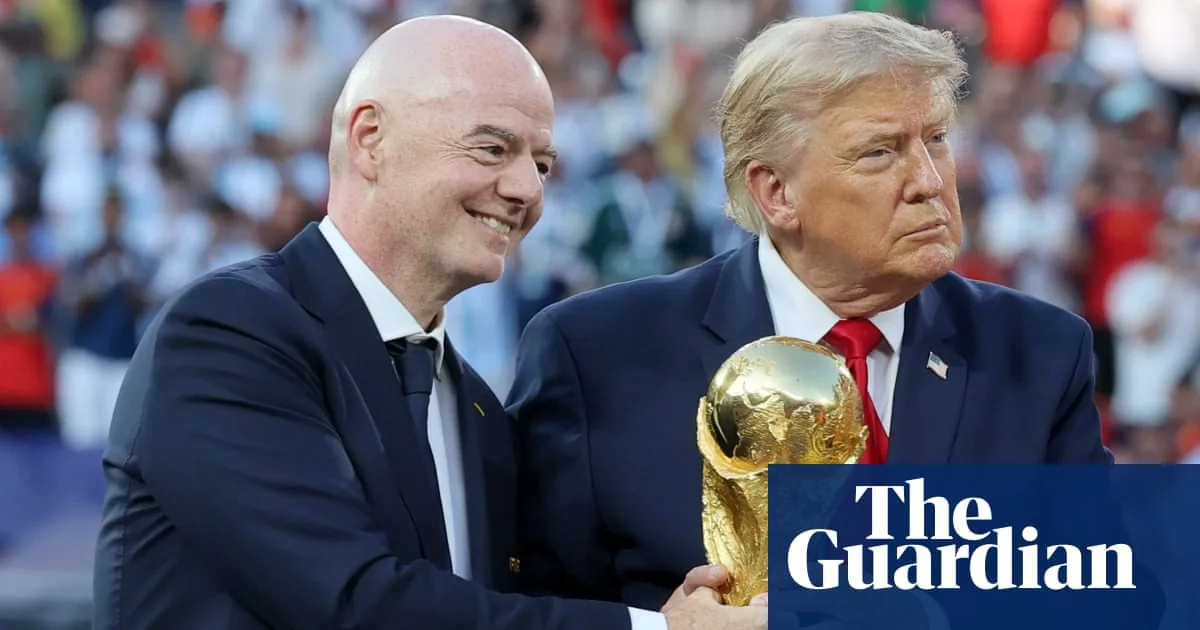
Fifa has unveiled plans to seek private investment for its competitions, including the World Cup, a move that has drawn strong criticism from Uefa, European football’s governing body. The global football organisation intends to expand its football development funding to over $10bn and invite third-party investment into a new venture.
The proposal involves inviting third parties to make minority, non-controlling investments in a new subsidiary named Fifa Forward Enterprise (FFE). This entity would consolidate Fifa’s commercial and event operations. The plan requires approval from Fifa’s 211 member nations. If approved, Thrive Eternal, an American venture capital firm founded by Joshua Kushner, is expected to lead the proposed investor group for FFE.
Fifa sources have indicated that there have been no discussions regarding Gianni Infantino, or anyone else, becoming the chief executive of FFE. However, Fifa’s statement affirms that Infantino and the organisation have a duty to oversee the project’s development, though the specific nature of his involvement remains undefined.
Uefa’s strong opposition
Uefa has reacted with strong disapproval, stating that the proposals “cross a line” that football’s governing institutions should not cross. The European body views the announcement as a significant concern, raising questions about the potential for further expansion of Fifa competitions in terms of both size and frequency, which could impact Uefa’s own lucrative events.
A statement from Uefa emphasised that “The soul and governance of football are not assets to trade – especially with zero transparency as to who gains financially. None of us are the owners of football. It is not Fifa’s to sell.” The Football Association also stated it was unaware of Fifa’s plans prior to their release.
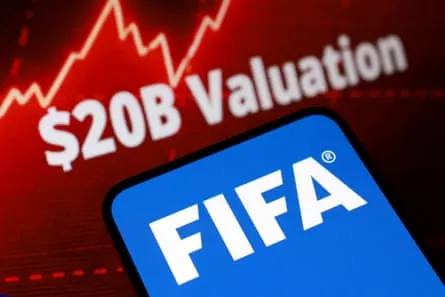
The proposed venture is reportedly valued at around $20bn, with Infantino aiming to capitalise on football’s increasing global popularity. Fifa’s revenues for the recent World Cup were reported to exceed $15bn, surpassing the projected figure of $13bn, which appears to have encouraged the pursuit of further financial opportunities.
The plans were initially reported in the Financial Times and The Times. The Times suggested that these plans could potentially generate tens of millions of pounds for Fifa president Gianni Infantino. Fifa had reportedly kept these plans confidential until the reports emerged, and some Fifa Council members were reportedly surprised by the announcement, having been excluded from the decision-making process.
Financial implications and governance concerns
As part of its pitch, Fifa states that all member associations could access up to $20m in “one-off capital” to fund development. Infantino has expressed that every nation should benefit from the wealth generated by football, aiming to ensure that the sport’s growth is inclusive and sustainable globally.
Fifa maintains that it would retain control of FFE, along with exclusive authority over football governance, competitions, the international match calendar, and all regulatory and sporting decisions. However, Uefa and other stakeholders are concerned that inviting private investment could subject decision-makers to significant external pressures, potentially influencing decisions that affect the entire sport.
This is not the first time Infantino has sought private capital for Fifa. In 2018, he had a deal in principle with a Japanese bank for $25bn to fund an expanded Club World Cup and a global Nations League, but this failed to gain sufficient support, largely due to opposition from Europe. Uefa and leading clubs are once again united against Fifa’s current plans.
The matter is expected to be a key discussion point at the next Fifa Council meeting in the autumn and during the Fifa Intercontinental Cup in December. The proposal could be put to a vote by all 211 members at the Fifa Congress in Morocco in March.
One senior English football executive privately compared the announcement to the European Super League plan, highlighting similar concerns. The drive to generate more finance through Fifa competitions could lead to the expansion of both the World Cup and the Club World Cup, potentially impacting the domestic football calendar and even leading to tournaments being played in winter months.
While $20m may not be a substantial sum in the English game, it represents a significant amount for many countries globally, which could garner support for the plan. Fifa has stated that the new enterprise would allow it to increase funding to each association from $8m to $20m annually. Fifa also indicated that it would carefully select long-term investors who would purchase minority, non-controlling interests in FFE, with all net benefits being reinvested into football worldwide.
Despite the controversy, Infantino is expected to be re-elected unopposed as president next year and, under Fifa statutes, must step down in 2031 after serving three full terms.
Source: bbc.com

Priya Nair
Sports Reporter