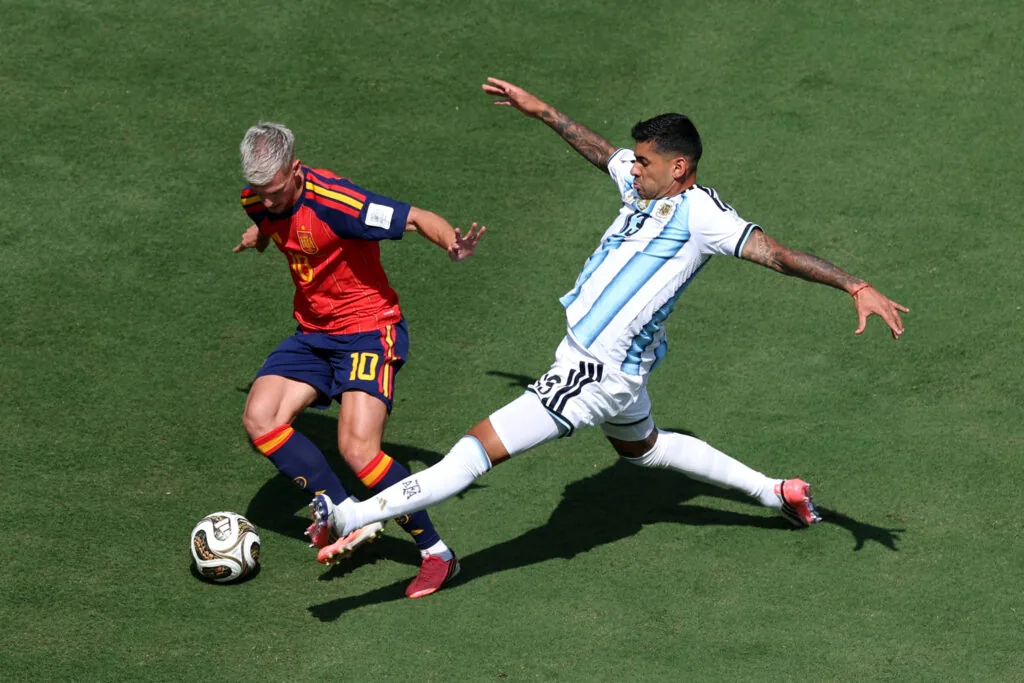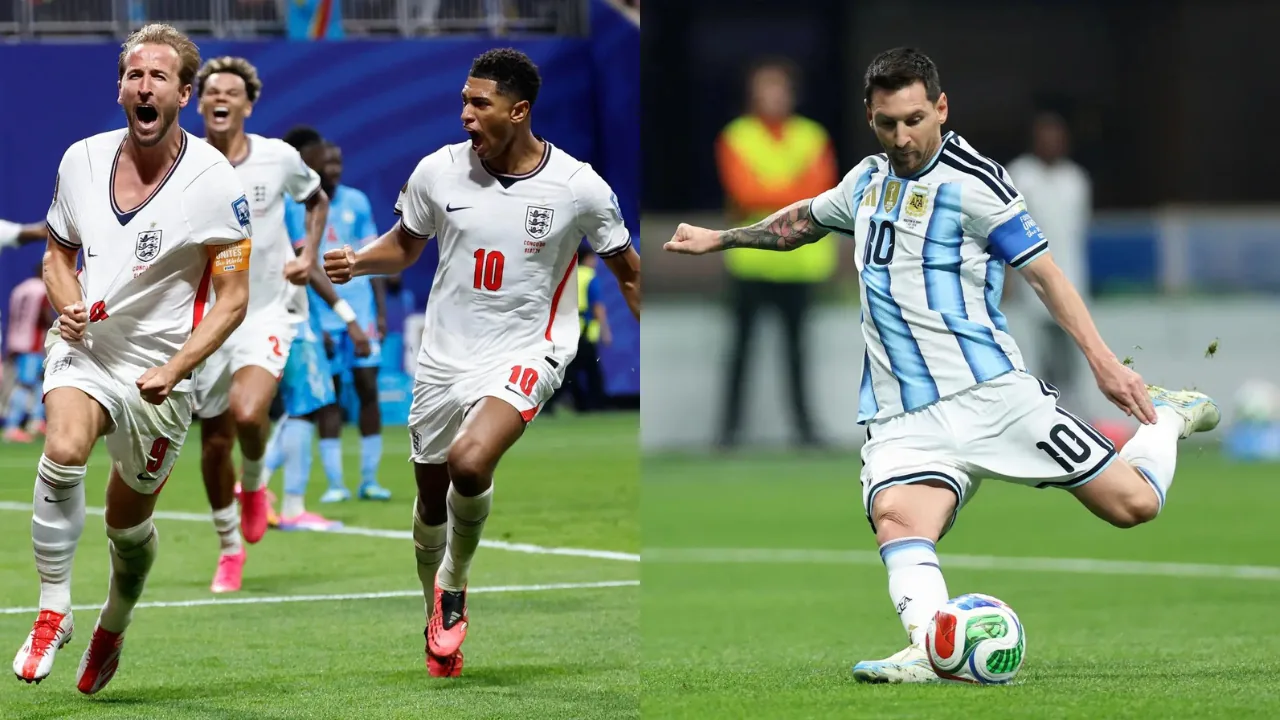
Argentina’s Vice President, Victoria Villarruel, has referred to England as “usurping pirates” ahead of the upcoming World Cup semi-final match between the two nations. Her comments were made in a post on X, emphasizing that the fixture is “not just another match.”
Villarruel’s remarks highlight the deep-seated historical and political tensions that often underscore encounters between Argentina and England. She stated, “I’m not going to be politically correct or keep a cool head – it’s always something more against the English.”
Historical Context and Political Statements
The vice president explicitly linked the match to the Falkland Islands, known in Argentina as the Malvinas, and referenced past football legends. “It’s the Malvinas, it’s Diego, it’s Leo’s last run, and it’s about stopping the invaders in their tracks,” she wrote, mentioning the late Diego Maradona and current star Lionel Messi. She concluded her statement with a popular fan chant, “Go Argentina! Because until our very last breath, we will keep claiming what is ours!”
Villarruel’s father participated in the 1982 Falklands War, a 74-day conflict between Argentina’s military dictatorship and the United Kingdom over the sovereignty of the South Atlantic islands. This conflict resulted in the deaths of 649 Argentines and 255 Britons, ending in a British victory.
The sovereignty of the Falkland Islands remains a contested issue, and the conflict continues to be a significant factor in the relationship between the two countries. The islands are a British territory located approximately 300 miles (480 km) off Argentina’s east coast.
Contrasting Views and Security Measures
In contrast to Villarruel’s strong political stance, Argentina coach Lionel Scaloni and several players have attempted to downplay the political and historical implications of the match. Scaloni described it as “a football match, plain and simple. So, mixing the two would be madness.”
Security measures are being implemented for the semi-final, which will take place in Atlanta. Argentine Security Minister Alejandra Monteoliva announced that fans would be prohibited from bringing flags or other items referencing the Falkland Islands into the stadium as part of the security plan.
The rivalry between Argentina and England extends across generations, deeply rooted in football, history, politics, and colonialism. This enduring rivalry has produced numerous controversial moments, red cards, and iconic goals throughout its history.
A Storied Football Rivalry
The chant, “Y ya lo ve, y ya lo ve. El que no salta, Es un ingles!” which translates to “And now you see, and now you see, whoever doesn’t jump is English,” is a common refrain among Argentina‘s football fans and players, sung regardless of the opposition. However, with England as the direct opponent in the World Cup semi-final, these words are expected to carry heightened emotion and hostility.
The rivalry’s first World Cup meeting occurred in 1962, but it intensified significantly four years later. In 1962, England defeated Argentina 3-1 in the group stage in Rancagua, Chile, with goals from Ron Flowers, Bobby Charlton, and Jimmy Greaves.
The 1966 World Cup quarter-final, which England won 1-0 in Wembley, remains a contentious match for Argentina, with claims of a disallowed goal and the sending off of Argentina captain Antonio Rattin. This game contributed to the later introduction of yellow and red cards in football.
The 1986 World Cup quarter-final, played four years after the Falklands War, is often considered a defining moment in the rivalry. Diego Maradona scored both the infamous “Hand of God” goal and the “Goal of the Century” within minutes, leading Argentina to a 2-1 victory over England before they went on to lift the trophy.
In 1998, Argentina defeated England in a penalty shootout after a 2-2 draw in the Round of 16 in Saint-Étienne, France, a match remembered for David Beckham‘s red card. Four years later, in 2002, England secured a 1-0 victory over Argentina in the group stage in Sapporo, Japan, with Beckham converting a penalty.
The upcoming semi-final will mark the return of one of football’s fiercest rivalries, 24 years after their last meeting in a World Cup. The Argentina Football Association has described this match as “the match fate owed Messi.”
Read Also
Source: aljazeera.com

Priya Nair
Sports Reporter