Hometown Pride and Global Stardom
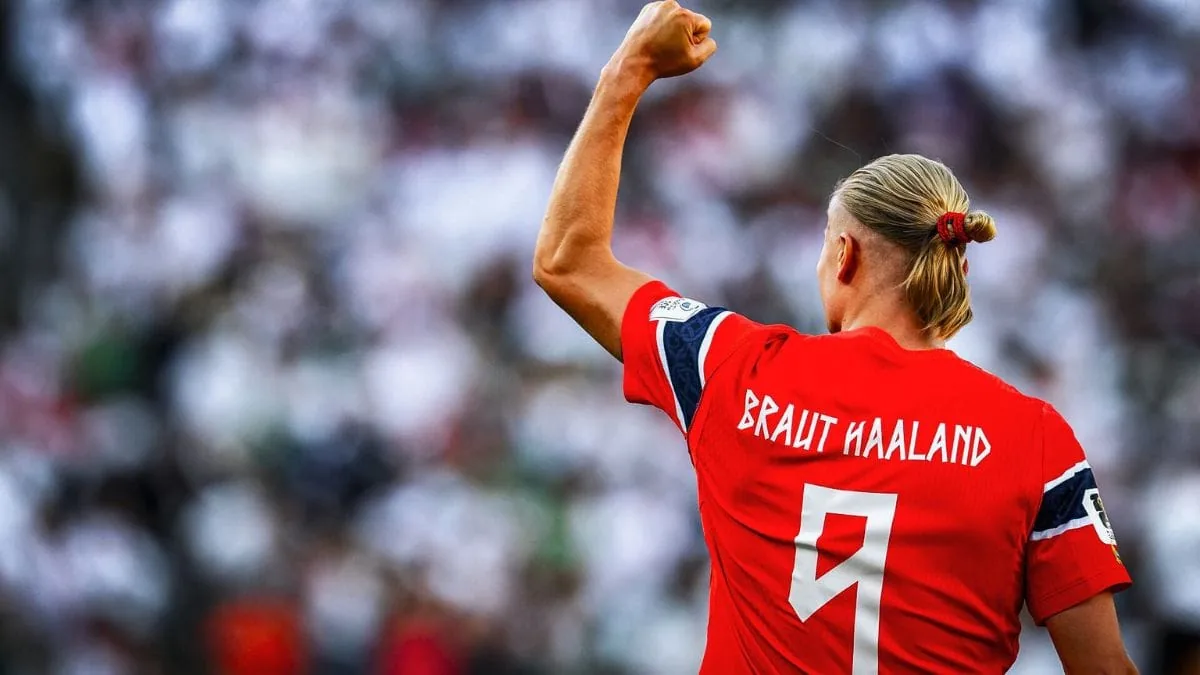
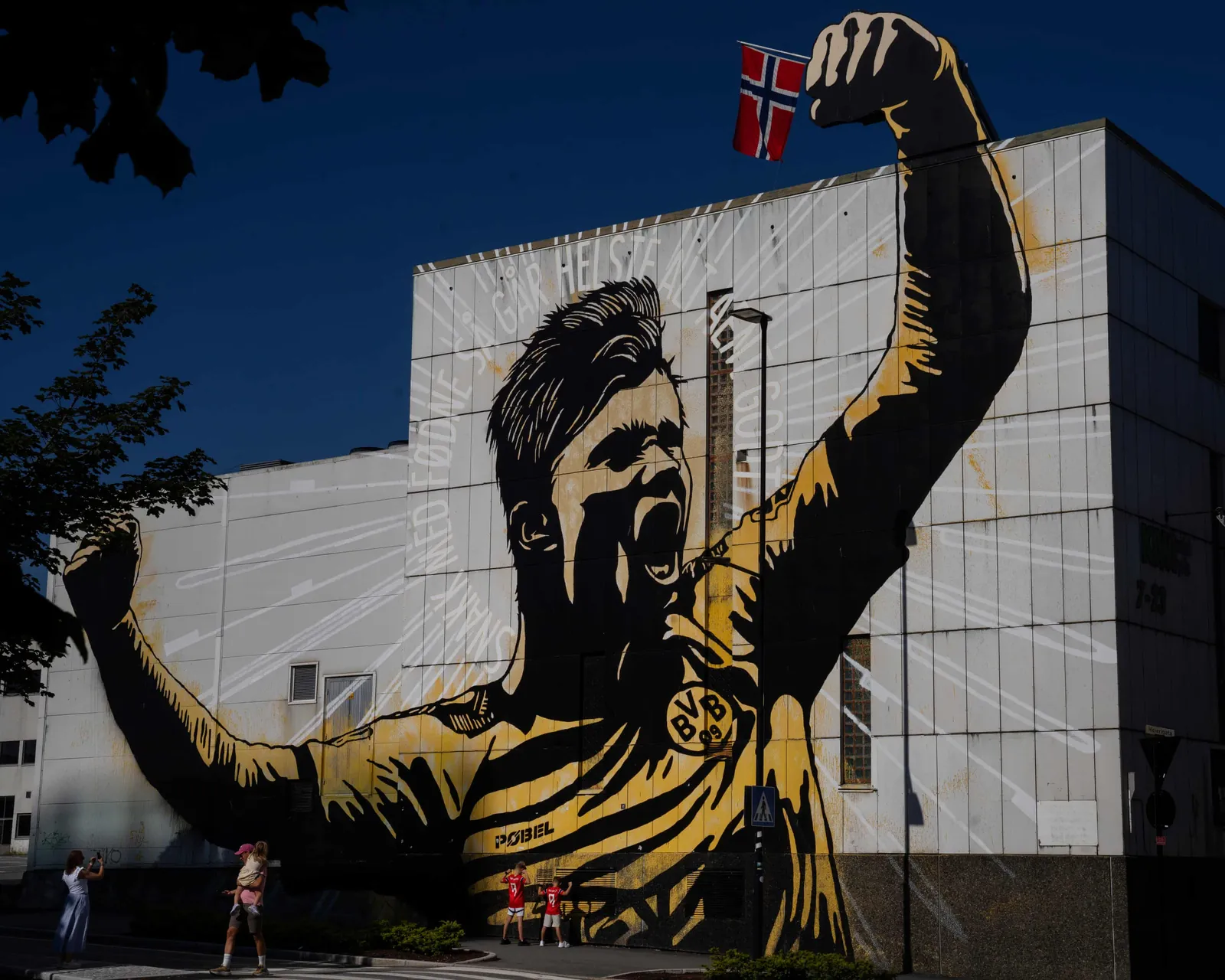
The small Norwegian farming town of Bryne, near Stavanger, is celebrating the global rise of one of its own, Erling Haaland. Although born in Leeds, Haaland grew up and trained in Bryne, where his impact is deeply felt. The town, which last saw Norway qualify for the World Cup in 1998, is now experiencing a renewed sense of community and pride thanks to the Manchester City striker.
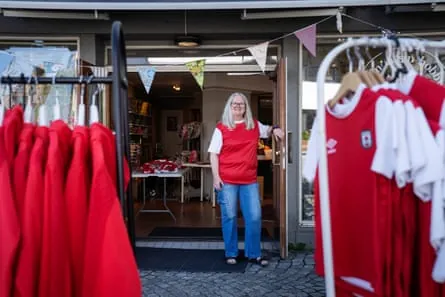
Olinda Haaland, who shares the famous surname but is not a relation, runs a fabric shop in Bryne’s central square. She notes that everyone in town has become a football fan, with many seeking Haaland merchandise. Retro World Cup shirts from 1998 sold out quickly, and now any red attire is in demand. Olinda describes the town’s reaction to Haaland’s success as “pure joy,” highlighting his contributions to Bryne.
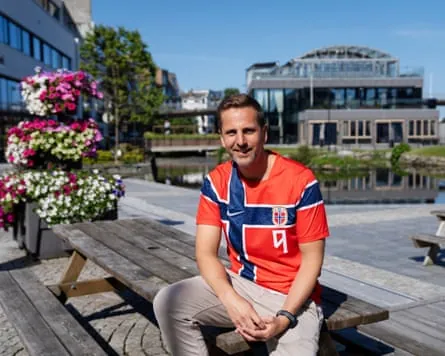
Andreas Vollusund, the mayor of Bryne and Haaland’s former schoolteacher, emphasizes the 25-year-old’s significant influence on the community. Vollusund, who taught Haaland when he was 10, recalls him as a “funny” and energetic child who loved sports and was focused on becoming a footballer. The mayor proudly refers to Haaland as “the little boy who has grown into a huge Viking,” suggesting that Bryne now feels like the “capital of Norway.”
Haaland maintains strong ties to his hometown, frequently visiting his old haunts. He also donates football equipment to children and organises reading competitions. A 16th-century book of Viking sagas, purchased by Haaland, is expected to arrive at the local library in the autumn, further cementing his connection to Bryne’s heritage.
Haaland’s Development and Influence
Vollusund attributes Haaland’s success partly to Bryne’s down-to-earth, hard-working farming culture and the characteristics he inherited from his parents. His mother was a national heptathlon champion, and his father, Alf-Inge Haaland, played for Leeds United. This background, combined with Norway’s focus on making sports fun for younger children, is seen as crucial to nurturing world-class athletes across various sports.
Hakon Grottland, head of player development within Norway’s national association, shared an anecdote about a video of a 16-year-old Haaland in a shooting drill. Despite many initial wayward attempts, Haaland’s dedication to practice, even when others had left, was evident. Grottland believes this relentless pursuit of improvement is a key factor in Haaland becoming the world’s best centre-forward.
Haaland’s physical development was also notable. After a talent camp in Stavanger in June 2014, where coaches did not initially identify him as a future international player, he experienced a rapid growth spurt. His elder brother, Astor, recounted that Haaland grew 20cm and gained 20 kilograms in a single year. This late physical development is seen as an inspiration for young athletes in Norway, demonstrating that talent can emerge and flourish at different stages.
Despite his ordinary formative years, Haaland displayed remarkable confidence from a young age. Brede Hangeland, Norway’s former national team captain and now assistant coach, remembers Haaland, then a teenager, confidently stating his ambition to become the best forward globally. This self-belief, combined with his exceptional talent, has led to an impressive record of 297 goals in 364 appearances for clubs like Molde, Red Bull Salzburg, Borussia Dortmund, and Manchester City.
National Impact and World Cup Performance
Haaland’s performance in the current World Cup has propelled him to new heights of stardom, especially in the United States and globally. His seven goals place him among the top scorers, trailing only Lionel Messi and Kylian Mbappe. His match-winning brace against Brazil in the Round of 16 secured Norway’s greatest World Cup result, leading them to their first quarter-final appearance since 1998.
Beyond his goal-scoring prowess, Haaland’s personality has resonated with fans. He is described as a self-deprecating, smiling figure who appears genuinely happy when his teammates score. This blend of professionalism, single-mindedness, and a relaxed, fun-loving team player makes him unique. His warmth and empathy with teammates and opponents, along with his contagious smiles and affectionate bear hugs, have made him a magnetic personality both on and off the pitch.
Norway’s manager, Stale Solbakken, has built a 4-3-3 counter-attacking system around Haaland’s strengths, allowing him to operate effectively. Solbakken notes that Haaland is easy to coach, prioritises the team, and is aware of his leadership role. This tactical approach, combined with Haaland’s versatility, has been crucial to Norway’s success. Haaland has scored with his left foot, right foot, a header, from inside the box, and from outside the box in the current World Cup, demonstrating his comprehensive goal-scoring ability.
The World Cup has fostered a sense of togetherness across Norway, according to Alf Ingve Berntsen, who began training Haaland when he was eight. Berntsen observed Haaland’s extraordinary passion and ability from an early age, describing it as a glowing fire. This unity is evident as Bryne prepares for an outdoor screening of Norway’s World Cup quarter-final match against England, with Mayor Vollusund planning to serve hotdogs to 3,000 children and families at an alcohol-free event at Bryne’s football stadium.
Read Also
Source: theguardian.com

Priya Nair
Sports Reporter