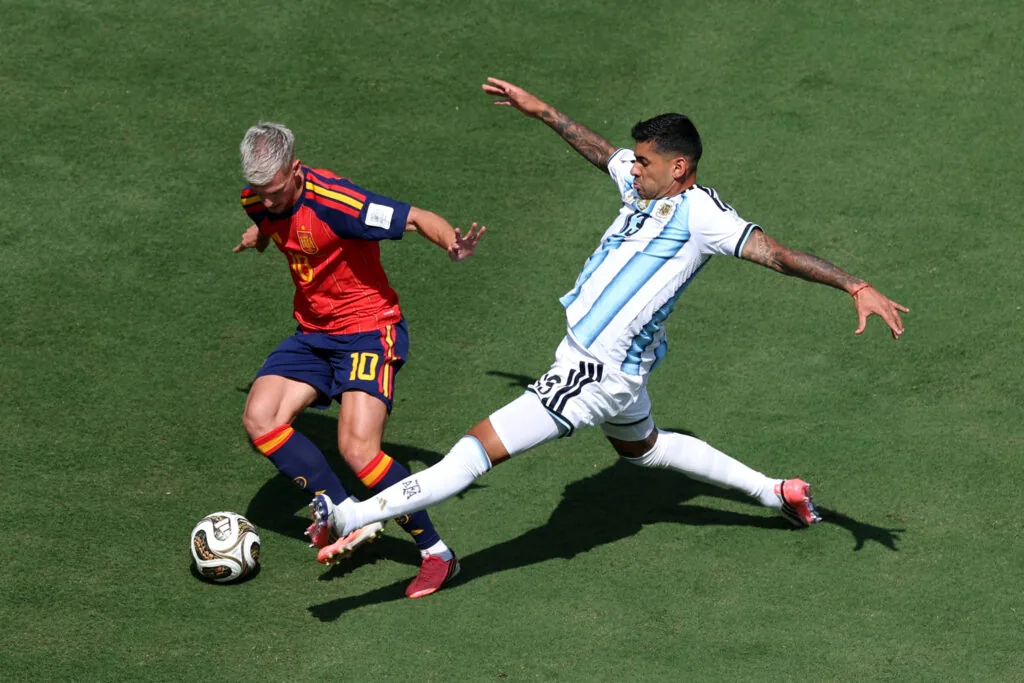
England and Argentina are set to reignite their long-standing football rivalry in Atlanta, marking the first encounter between the two nations in 21 years. This highly anticipated match will see Lionel Messi play against England for the first time in his career, as the defending world champions aim to advance to the World Cup final.
The rivalry between these two footballing powerhouses spans generations, characterised by dramatic moments, controversies, and exceptional goals. Political tensions, particularly stemming from the Falklands War in the 1980s, have also played a significant role, with Argentina fans and players often referencing the conflict in their football songs.
Early Encounters and Controversies
The World Cup rivalry between England and Argentina began in 1962. In their first meeting in Rancagua, Chile, England secured a 3-1 victory in the group stage. Goals from Ron Flowers, Bobby Charlton, and Jimmy Greaves established a 3-0 lead for England, with Argentina scoring a late consolation goal. Both teams finished the group stage with similar records, but England progressed to the quarter-finals due to a superior goal difference, where they were subsequently eliminated by Brazil.
Four years later, the rivalry intensified significantly during the 1966 World Cup quarter-final at Wembley. England won 1-0, but the match was marred by controversy. Argentina‘s captain, Antonio Rattin, was sent off after 33 minutes for two offences within three minutes: a trip on Bobby Charlton and arguing with German referee Rudolf Kreitlein. The game was delayed for nearly eight minutes as Rattin refused to leave the pitch, reportedly asking for an interpreter. This incident is believed to have contributed to the introduction of red and yellow cards in football, first used in the 1970 World Cup.
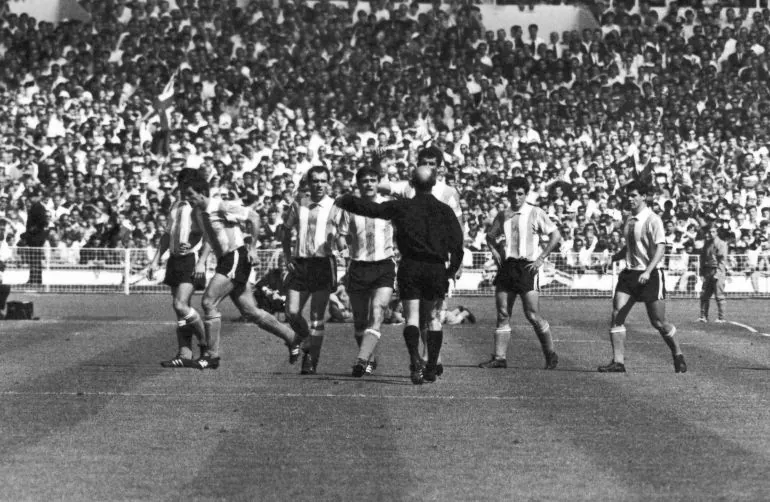
After the match, England manager Alf Ramsey controversially described the Argentine side as ‘animals’ and prevented his players from swapping shirts. George Cohen, an England defender from the 1966 team, recalled the match as being filled with ‘snidey things’ like spitting and pulling hair, which he viewed as attempts to intimidate the English players. Rattin, who represented Argentina from 1959 to 1969, passed away on Saturday, just hours before Argentina‘s quarter-final victory over Switzerland, a match where players wore black armbands in his honour.
The Hand of God and Beckham’s Redemption
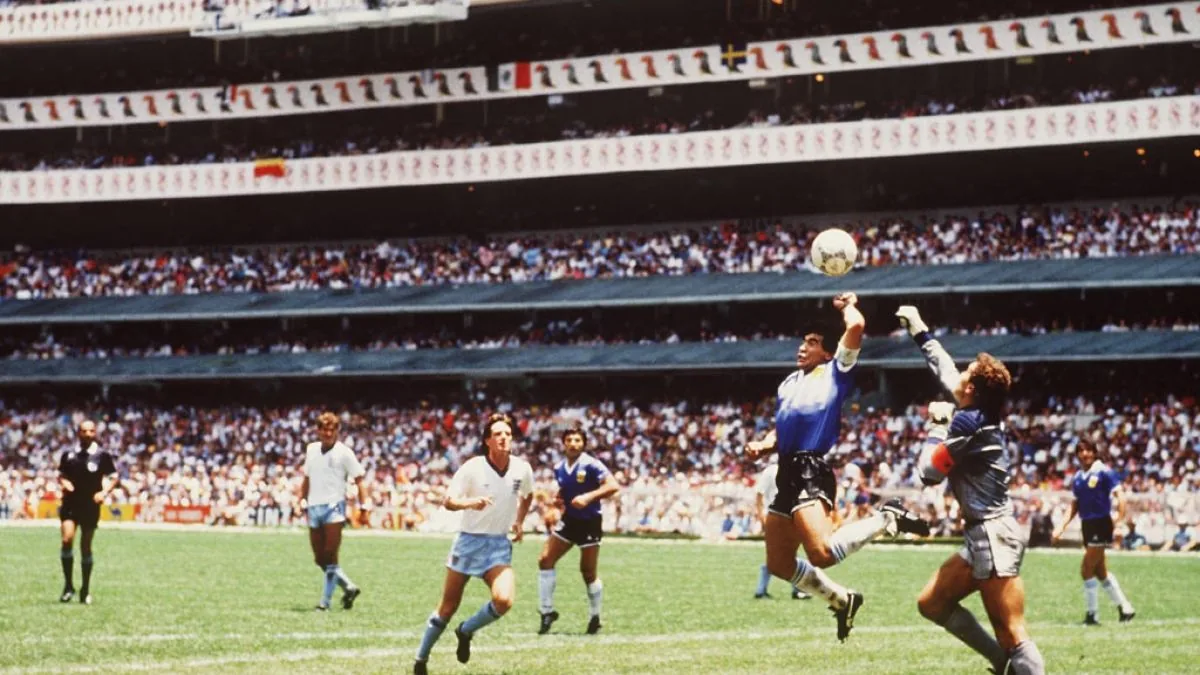
The 1986 World Cup quarter-final in Mexico City remains one of the most iconic and controversial matches between the two nations. Played just four years after the Falklands War, the political undertones were palpable. Diego Maradona scored two memorable goals for Argentina. The first, six minutes into the second half, was the infamous ‘Hand of God’ goal, where he fisted the ball past England goalkeeper Peter Shilton. Despite protests from England players, the goal stood.
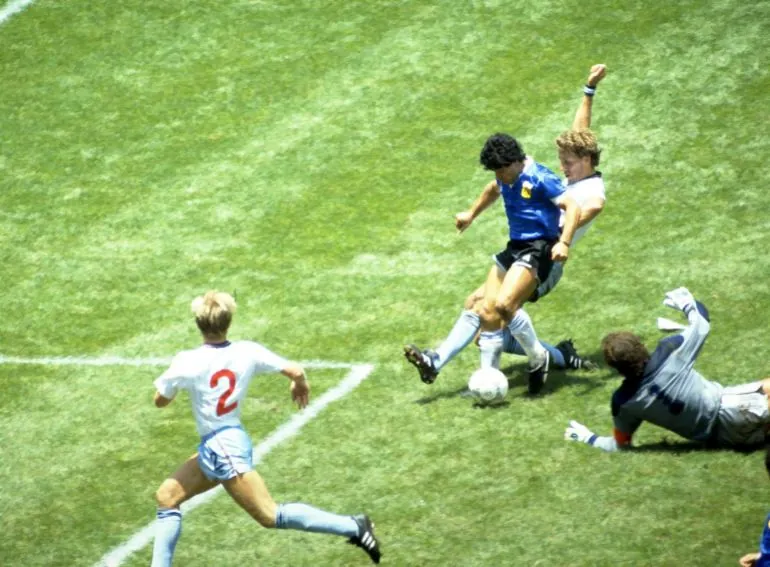
Just four minutes later, Maradona scored what is often considered the ‘Goal of the Century,’ dribbling past multiple England defenders before slotting the ball home. Gary Lineker scored a late goal for England, but it was not enough, and Argentina went on to win the World Cup. Maradona eventually apologised for the ‘Hand of God’ in 2005, an apology that Shilton rejected.
The 1998 World Cup last-16 match in St Etienne, France, was another dramatic encounter. David Beckham received a red card after kicking Diego Simeone in retaliation for a foul. Prior to this, Gabriel Batistuta and Alan Shearer had exchanged penalties, and Michael Owen scored a spectacular solo goal to give England a 2-1 lead. Javier Zanetti then equalised for Argentina from a clever free-kick. Despite being down to 10 men, England battled on, and a late header from Sol Campbell was disallowed. Argentina ultimately won the match 4-3 in a penalty shootout after misses by David Batty and Paul Ince.
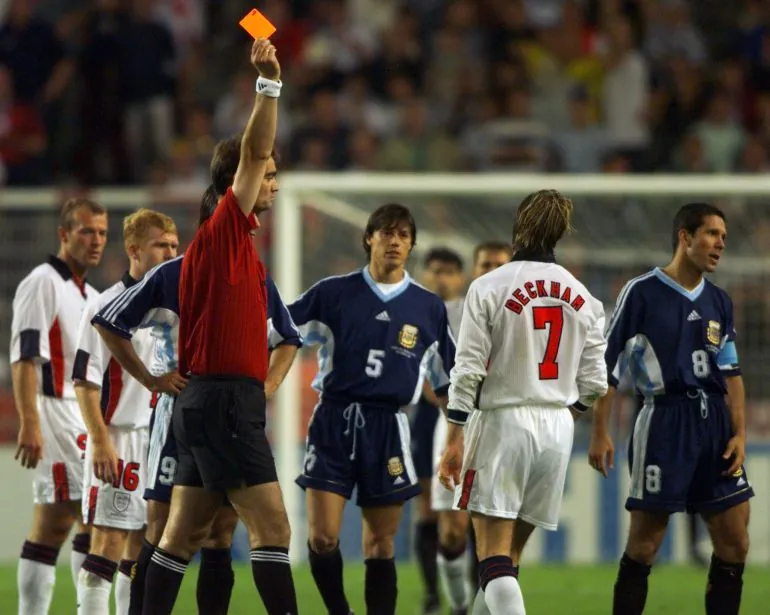
Four years later, at the 2002 World Cup in Sapporo, Japan, England and Beckham found redemption. Beckham, then England‘s captain, scored the only goal of the group stage match from the penalty spot after Michael Owen was fouled by Mauricio Pochettino. This crucial 1-0 victory helped England progress from the group stage, while Argentina, who drew their final group game, were eliminated before the knockout rounds for the first time since 1962. England went on to beat Denmark in the last 16 before being knocked out by Brazil in the quarter-finals.
The upcoming match in Atlanta will be the first time England and Argentina have met in 21 years, continuing a rivalry that has been passed down through generations.
Read Also
Source: bbc.com

Priya Nair
Sports Reporter