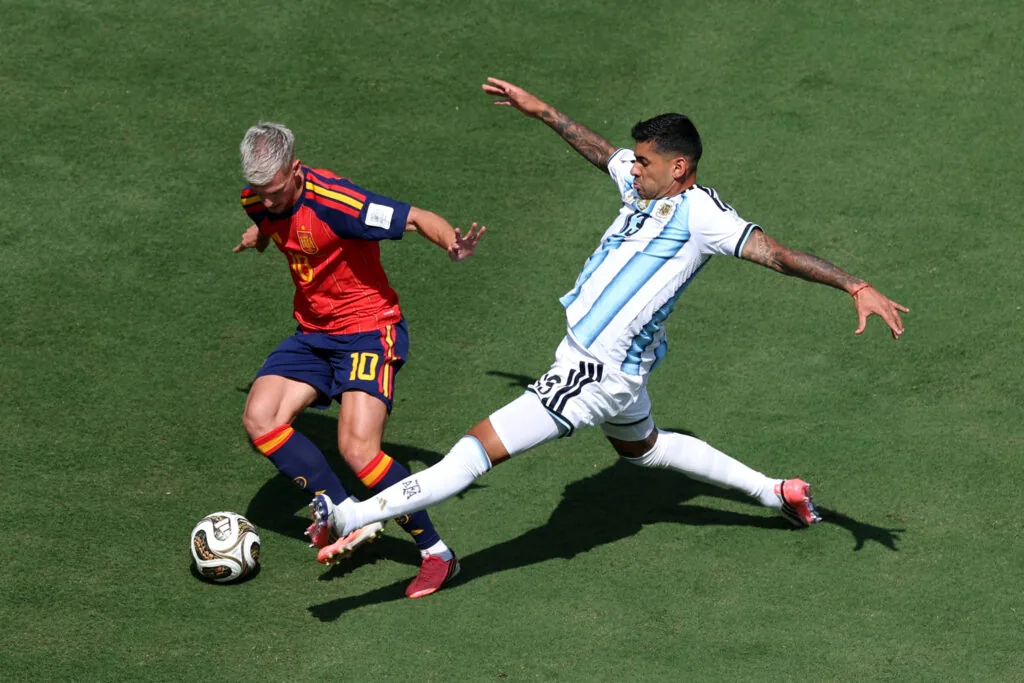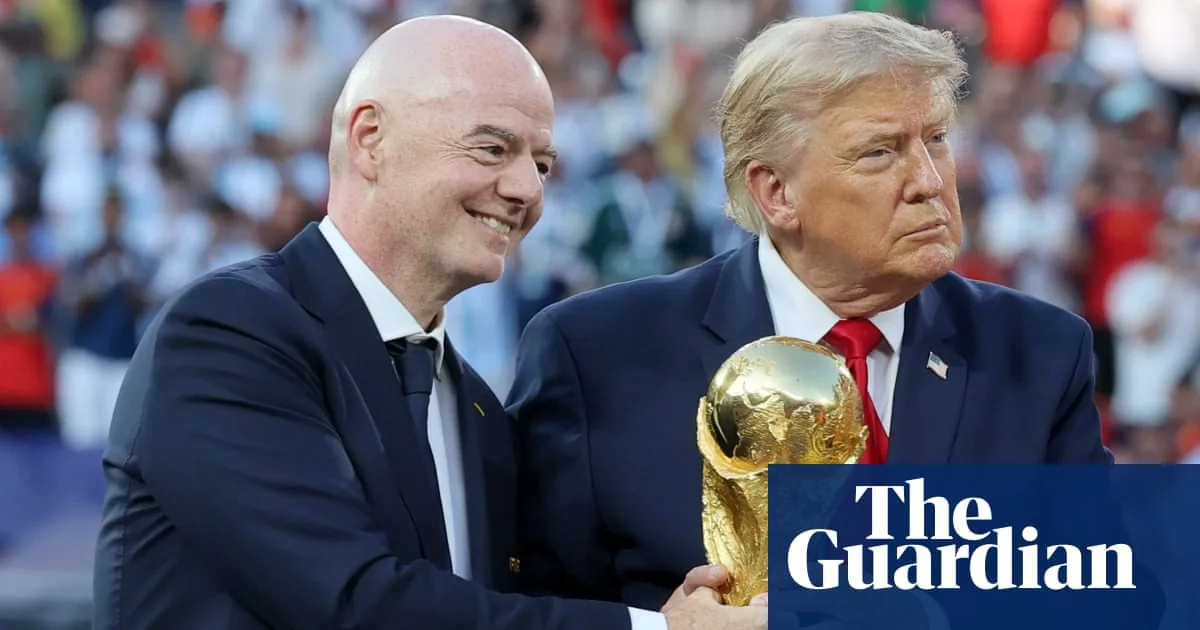
The prospect of a 64-team World Cup is under consideration, with FIFA president Gianni Infantino indicating that the governing body will examine the proposal following the 2026 World Cup. The idea for an expanded tournament was initially put forward last year, and Infantino suggests that the success of the current 48-team format warrants exploring further expansion.
Infantino stated that these matters would be assessed after the upcoming World Cup. He emphasised the importance of organising the tournament for a global audience, not solely for Europe and South America, to allow every nation to aspire to participate. He highlighted the increasing quality of teams worldwide and the need to provide smaller countries with an incentive for continuous improvement.
Rationale for Expansion
The FIFA president described the inaugural 48-team World Cup as a significant success, noting that nine out of ten African teams advanced to the knockout stages. He pointed out that only five African teams participated in the previous World Cup, underscoring the importance of inclusivity and offering more teams the chance to compete.
The FIFA council officially approved the expansion of the World Cup from 32 to 48 teams in 2017, with the change taking effect from the 2026 finals. Speculation about further expansion has persisted since then. A formal proposal to increase the 2030 World Cup to 64 teams was submitted by the South American governing body, Conmebol, in April 2025, though no decision has been made.
Infantino’s initial manifesto when elected in 2016 included increasing the World Cup size from 32 to 40 teams, which quickly escalated to 48 teams and was approved. The larger the tournament becomes, the more complex it is to host. The 2026 World Cup will be held across three countries, while the 2030 edition will involve six nations: Morocco, Portugal, Spain, along with Argentina, Paraguay, and Uruguay as centenary hosts.
Challenges and Opposition
The proposed expansion to 64 teams has met with opposition from several football officials. UEFA president Aleksander Ceferin has called the 64-team proposal a “bad idea,” suggesting it would negatively impact both the tournament itself and the qualification process. Asian Football Confederation (AFC) president Sheikh Salman bin Ibrahim Al Khalifa echoed these concerns, warning that further expansion could lead to “chaos.”
Victor Montagliani, president of Concacaf, also expressed reservations, stating that the suggestion “doesn’t feel right” and could harm the broader football ecosystem. The idea was first formally proposed by Uruguayan football official Ignacio Alonso at a FIFA Council meeting in March 2025, with Alejandro Dominguez, president of Conmebol, later describing a 64-team tournament in 2030 as his “dream.”
Hosting a 64-team tournament, which would feature 128 games, presents significant logistical challenges for host nations. For example, it is currently unknown how Saudi Arabia would manage such a large-scale event if it were to host the 2034 World Cup. Despite these concerns, a larger World Cup offers more countries the opportunity to participate, potentially allowing almost a third of the 211 FIFA-affiliated countries to qualify. An expanded tournament also implies increased revenue distribution to member associations.
The FIFA council holds the ultimate authority to decide on any expansion. However, there are currently no indications that such a change is imminent. The 2030 World Cup will be primarily co-hosted by Spain, Portugal, and Morocco, with Argentina, Uruguay, and Paraguay hosting the three opening matches to commemorate the competition’s centenary, as Uruguay hosted the first World Cup in 1930.
Read Also
Source: bbc.com

Priya Nair
Sports Reporter