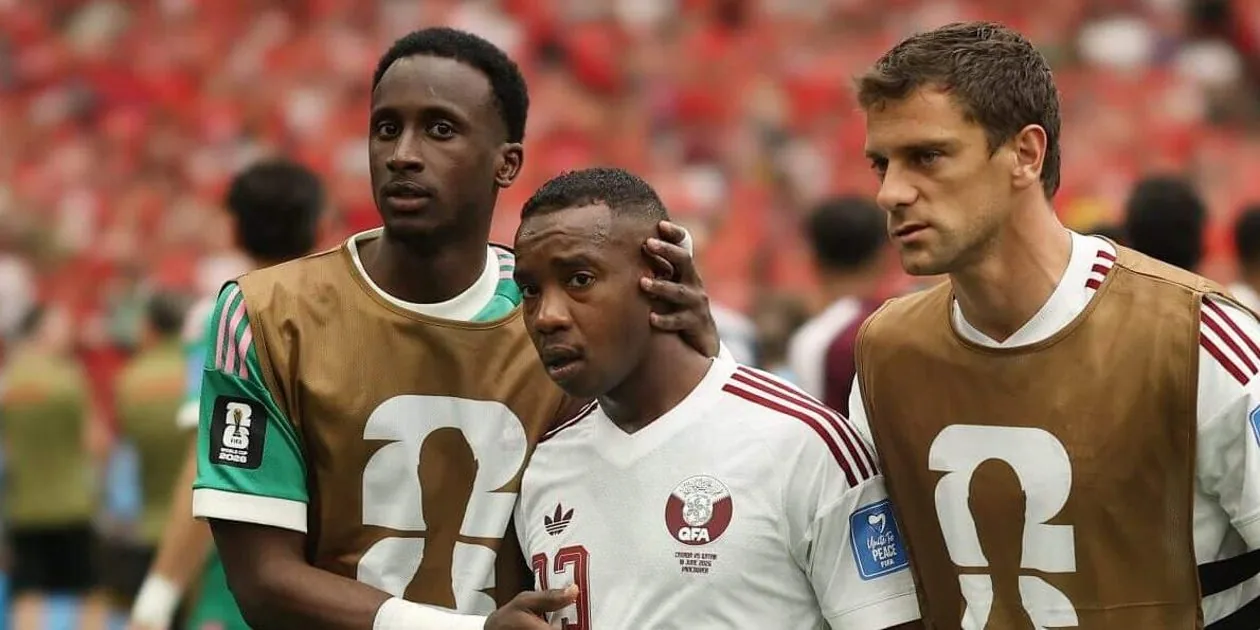
Assim Madibo, a midfielder for Qatar, has been handed a five-match ban by FIFA‘s disciplinary committee. The suspension follows a challenge on Canada‘s Ismael Kone during a recent match, which resulted in Kone sustaining a broken leg. The decision is subject to appeal.
The incident occurred during Qatar‘s match against Canada, where Kone suffered fractures to both the tibia and fibula in his lower left leg. The injury will see Kone, who plays for Italian side Sassuolo, miss the remainder of the tournament and potentially a significant part of the upcoming domestic season. He underwent surgery shortly after the game in Vancouver.
Initially, the referee, Cristian Garay, issued a yellow card to Madibo for the foul. However, the card was upgraded to a red after the severity of Kone‘s injury became apparent. Madibo did not protest the red card decision.
Following the match, Madibo visited Kone in the hospital. Pictures emerged showing Kone hugging Madibo, suggesting a lack of significant animosity between the two players despite the serious injury. Madibo also went to the Canada dressing room after the game to offer an apology.
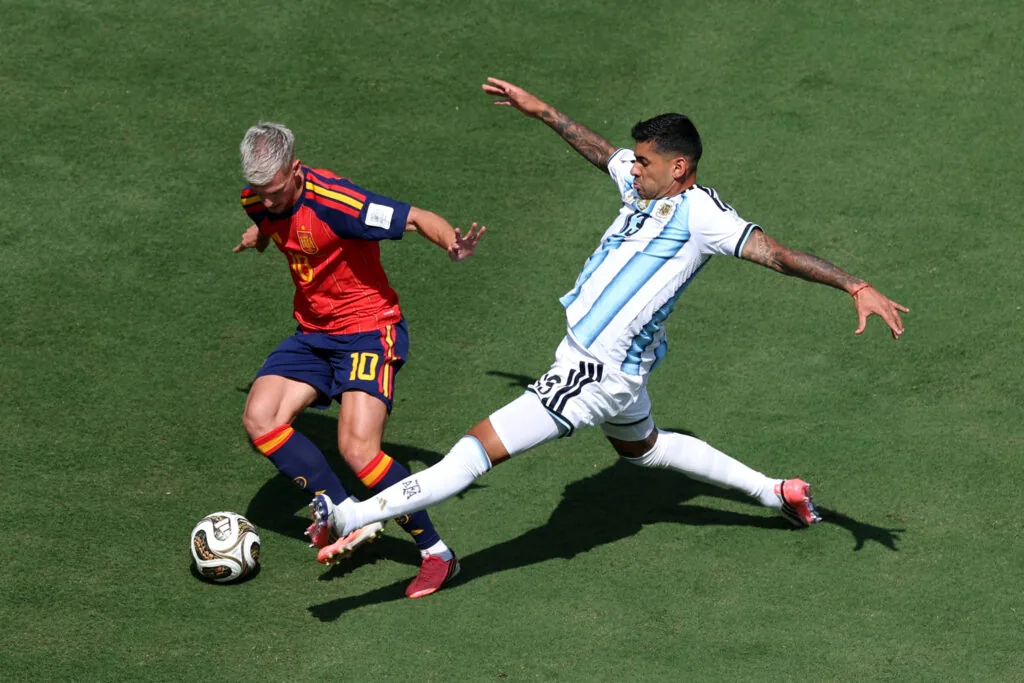
The foul itself was described as a late, misguided attempt to play the ball rather than a deliberate act to harm the opponent. Kone had played the ball down the line, and Madibo was late in his challenge, kicking the back of Kone‘s leg. Canada‘s coach, Jesse Marsch, acknowledged after the game that he did not believe Madibo intended for such a severe outcome.
FIFA’s Disciplinary Decision
The five-match suspension was announced by FIFA on Wednesday, citing a breach of Article 14.1.e (serious foul play) of the FIFA Disciplinary Code. This ban is an increase from the mandatory one-game suspension that typically follows a red card.
This marks the first time Madibo has been sent off at an international level, despite having played 64 times for Qatar. This record suggests that his previous conduct was not a factor in the disciplinary committee’s decision. FIFA did not provide further reasons for the decision beyond the short statement regarding serious foul play.
The decision has raised questions, with some suggesting that the severity of the punishment appears to be largely influenced by the extent of Kone‘s injury rather than solely the nature of the challenge or the intent behind it. While the laws of the game state that excessive force or brutality constitutes serious foul play, leading to at least a two-match ban, a five-game suspension is seen by some as an overreaction.
Comparisons have been drawn to other incidents where challenges, seemingly more reckless, resulted in lesser penalties. For instance, a challenge by Brazil‘s Danilo on Scotland‘s Kieran Tierney, which appeared to be at shin height, resulted only in a yellow card, as Tierney quickly recovered.
Impact and Precedent
The ban on Madibo contrasts with FIFA‘s previous flexibility regarding other suspensions in the same World Cup. There have been instances where one-game suspensions for players like Nicolas Otamendi and Moises Caicedo, who were dismissed in their country’s final qualifiers, were waived. Similarly, Cristiano Ronaldo theoretically should have missed the first two games of the tournament after a previous sending off.
FIFA had previously stated that such amnesties were granted to ensure teams could compete with their strongest squads. However, this consideration does not appear to have been applied in Madibo‘s case. He has already served one game of his suspension against Bosnia and Herzegovina.
The Qatar team has the option to appeal the decision, though at the time of writing, they had not responded to inquiries about their intentions. If the ban is not reduced on appeal, the remaining matches of Madibo‘s suspension will not impact Qatar‘s participation in the current World Cup, as they were not expected to advance to the later stages of the tournament.
Canada is set to play Switzerland in their final group game on Wednesday, aiming to qualify for the last 32 as group winners.
Read Also
Source: nytimes.com

Priya Nair
Sports Reporter